Safety valves are the last line of defence in pressure system protection. When every other control system fails, it is the safety valve that stands between normal operation and a catastrophic overpressure event. For plant engineers and maintenance professionals, understanding how to properly test and maintain these critical devices is not just a regulatory requirement — it is a fundamental responsibility.
This comprehensive guide covers everything from basic set pressure verification to advanced seat tightness testing, helping engineers ensure compliance with ASME Section VIII, API 520/521, and API 527 standards while maximising plant reliability and safety.
Introduction
Pressure relief devices are required on virtually every pressurised vessel and system in industrial plants. From power generation to oil and gas processing, these devices must function reliably when called upon — often after years of service in harsh environments.
The consequences of safety valve failure range from production losses and equipment damage to personnel injury and environmental harm. Regular, thorough testing is the only way to ensure that these devices will perform as intended when the moment of need arrives.
What Is Safety Valve Testing?
Safety valve testing encompasses a range of procedures designed to verify that a pressure relief valve will open at its designated set pressure, achieve full lift within allowable overpressure, and reseat properly without excessive leakage.
"A safety valve that has not been tested is a safety valve whose condition is unknown. In critical process safety applications, unknown is unacceptable."
The primary testing methods include:
- Set Pressure Testing — Determining the exact pressure at which the valve opens
- Seat Tightness Testing — Verifying that the valve seats leak-free after reseating
- Accumulated Pressure Testing — Confirming full lift and proper flow capacity
- Blowdown Verification — Measuring the pressure drop required for reseating
Key Testing Procedures
Set Pressure Verification
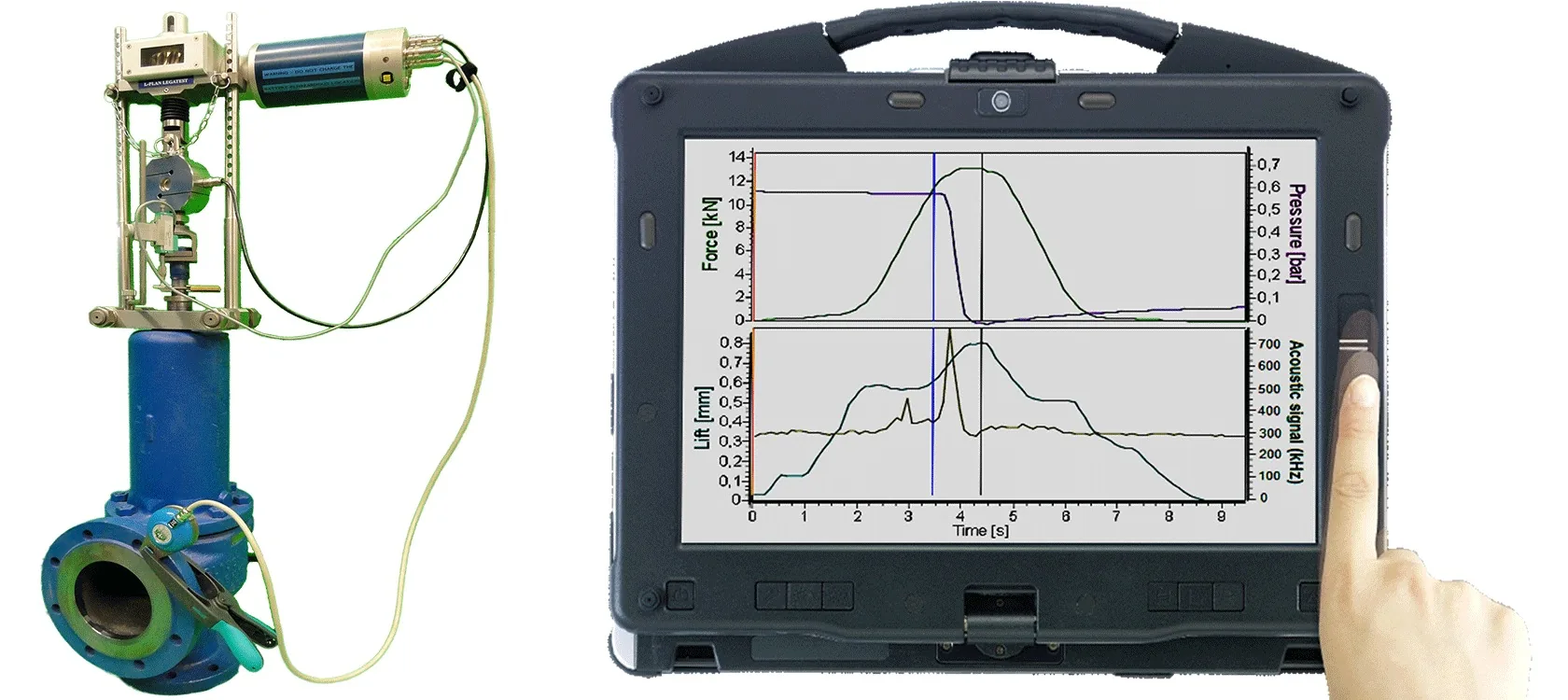
Set pressure is the inlet pressure at which the safety valve begins to open under service conditions. Verification is typically performed using a hydraulic or pneumatic test stand that gradually increases pressure until the valve pops. According to ASME PTC 25.3, the set pressure tolerance is typically ±1% for spring-loaded valves and ±2% for pilot-operated valves.
Seat Tightness Testing
After the valve reseats following a pop test, it must be checked for leakage across the seat. API 527 specifies acceptable leakage rates based on valve size, type, and service. Testing can be performed using:
- Air Test — Bubbler method for valves in gas service
- Hydrostatic Test — Pressure decay method for liquid service valves
- Isotropic Testing — Advanced method using pressure decay measurement
Online Testing (Trevi Test)
Online testing, also known as Trevi testing, allows safety valves to be tested while the system remains in service. This method applies an external hydraulic force to assist the spring at a known pressure, allowing the set pressure to be calculated without requiring a plant shutdown.
Online testing offers significant advantages in terms of reduced downtime and the ability to test valves under actual operating conditions, including temperature effects on spring characteristics.
ASME & API Standards
Compliance with industry standards is essential for both safety and regulatory purposes. The key standards governing safety valve testing include:
- ASME Section VIII Div. 1 — Rules for construction of pressure vessels including relief device requirements
- API 520 Part I — Sizing and selection of pressure relief devices
- API 520 Part II — Installation of pressure relief devices
- API 521 — Pressure relieving and depressuring systems
- API 527 — Seat tightness of pressure relief valves
- ASME PTC 25.3 — Performance test code for pressure relief devices
Regular testing in accordance with these standards not only ensures compliance but also provides valuable data for predictive maintenance programs and reliability engineering.
Common Challenges & Solutions
Spring Fatigue
Over time, valve springs can lose their calibrated tension due to thermal cycling, corrosion, or mechanical fatigue. Regular set pressure testing identifies springs that have drifted out of tolerance before they cause operational issues.
Seat Damage
Corrosion, erosion, or debris can damage valve seats, leading to leakage. Seat tightness testing detects these issues early, allowing for lapping or replacement before the valve is needed in an overpressure event.
Incorrect Installation
Safety valves must be installed with proper inlet piping, minimised inlet pressure loss (typically less than 3%), and appropriate outlet piping to prevent backpressure effects. A valve that is correctly tested in the workshop but incorrectly installed will not perform as expected.
Conclusion
Safety valve testing is a critical component of any comprehensive pressure system integrity programme. By understanding the testing procedures, applicable standards, and common challenges, plant engineers can ensure that their safety valves will perform reliably when needed most.
At Power Tech Testing & Services, our team of certified technicians performs safety valve testing in accordance with all applicable ASME and API standards. Whether you require workshop testing, online Trevi testing, or a comprehensive valve maintenance programme, we have the expertise and equipment to support your plant's safety and reliability goals.
Contact our engineering team today to discuss your safety valve testing requirements.