
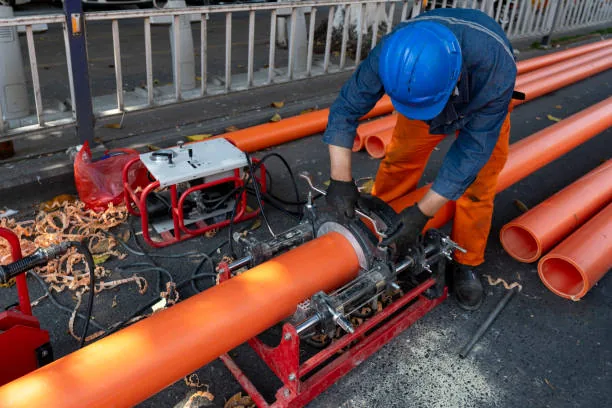
Hydrostatic testing verifies the strength and leak-tightness of pressure vessels, pipelines, and components.
Test Pressure
Test pressure is derived from the design pressure and the ratio of allowable stresses at test and design temperature, per the governing code — ASME B31.3 for process piping, ASME VIII for vessels.
Holding Times and Acceptance
A minimum hold at test pressure, followed by examination at a reduced pressure, with no visible leakage and no pressure decay beyond the allowance for thermal effects.
Safety Precautions
Full venting of trapped air, calibrated and correctly ranged gauges, and an exclusion zone sized for the stored energy are non-negotiable.
Talk to us about your next hydro test.